About
I’m Junho, a CS and Data Science student at Northwestern with a focus on AI.
I care about building technology that actually makes a difference in people’s lives.
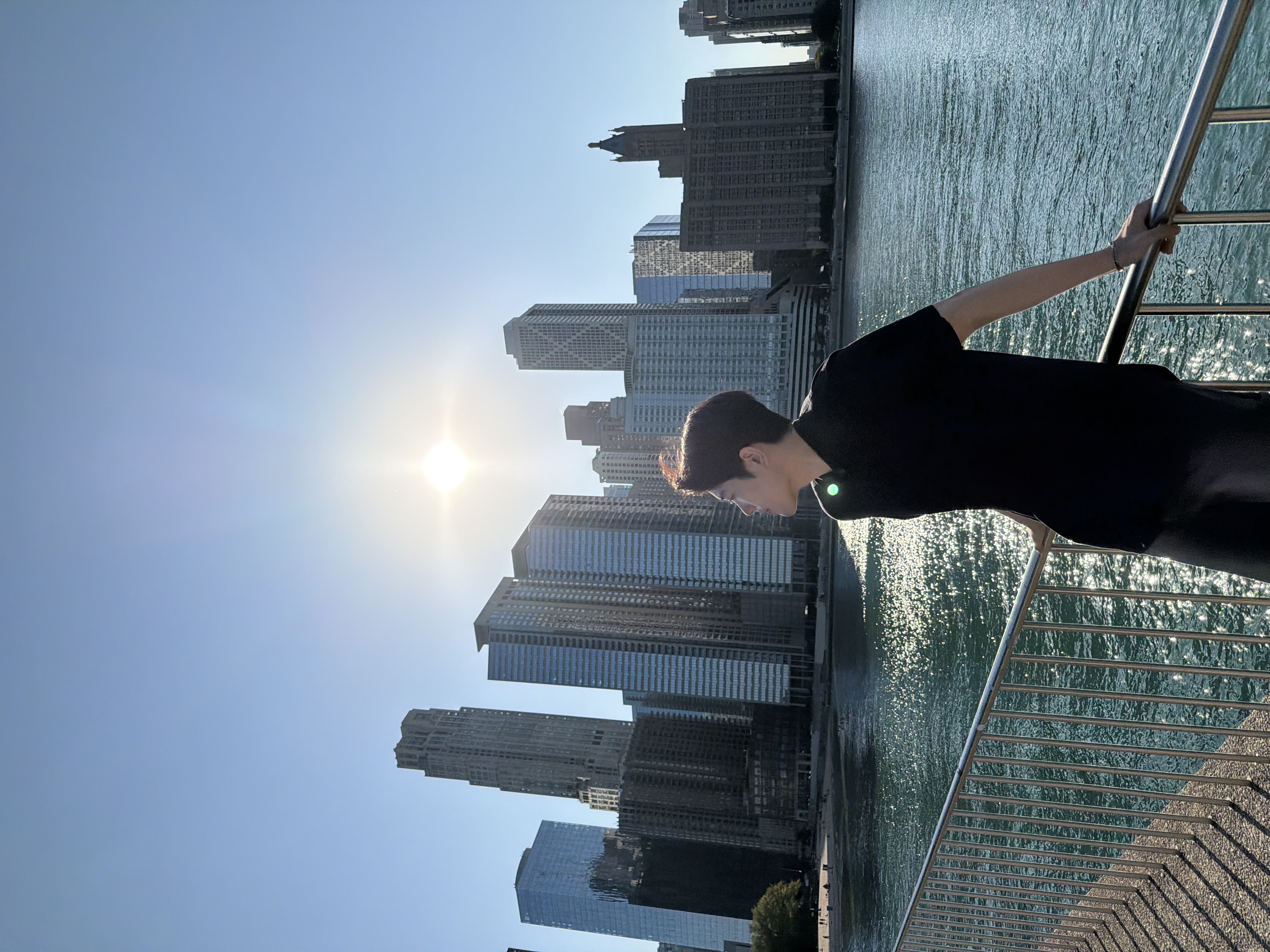
Chicago, IL
My Journey
A personal timeline of how I got here.
2019
KMLA
Korean Minjok Leadership Academy
KMLA is a selective boarding school, and the environment was a step up: talented, driven students and far more room for things outside academics than a typical Korean high school. Clubs were a big part of it. I did musicals, band, entrepreneurship, math, and overseas volunteering, and made some of my closest friends there.
Being surrounded by people that talented pushed me to find my own strengths and learn to collaborate, which is probably the most useful thing I took from those three years.
2022.2
After KMLA
Post-graduation
Graduating in February on the Korean calendar left me about six months before college. With unstructured time to think about direction for the first time, I landed on data science: I liked practical, analytical work, was good with numbers, and it was something I could apply across a lot of different problems.
2022.8
Air Force
Republic of Korea Air Force
I enlisted right after high school, which is unusual in Korea, where most people serve during or after college. I wanted it done before my studies rather than interrupting them. The hierarchy taught me about leadership and responsibility in a way school hadn't, and living alongside people from backgrounds I'd never encountered changed how I see things. In my free time, I competed in data analysis competitions and prepared for college.
2024.6
Daytrip
Daytrip
Daytrip (now Exqz) was an app I used during military leave to find places to visit. I wanted to try working before college, so I cold-emailed the CEO and joined as an intern in global sales and marketing. It was my first look at how a startup operates, and I spent most of my time making things more efficient: better tools, organized databases, streamlined workflows.
2024.8
WashU

Washington University in St. Louis
I started studying CS and data science here. CS appealed to me for how practical it was, and as AI became more present across different fields, I got more interested in its applications.
I got involved on campus too:
- Sang in Mosaic Whispers (a cappella)
- TA'd CS 131 (Intro to Computer Science)
- Competed in 3 hackathons
- McKelvey Fellowship fellow
2025.6
NAVER
NAVER Cloud, Digital Healthcare Lab
My first real experience working in the field I'd been studying. I interned at NAVER Cloud's Digital Healthcare Lab as an AI research intern, working on large language models and transformer-based foundation models in biomedical informatics. It was also my first time working in anything biology-related. I don't come from a bio background, but healthcare felt like one of the areas where AI could have the most meaningful impact, so I wanted to see what that looked like up close.
I had two main focuses:
- Reviewing recent research on LLMs in healthcare and biomedical applications
- Collaborating with a partnering pharmaceutical company to reproduce relevant literature and define AI modeling problems for their research challenges
Biomedical AI touches a wide range of modalities, so I got exposure to many different types of models and data. This was also my first time doing research, and the biggest lesson was how much the outcome depends on asking the right question. The technical work matters, but framing the problem well is what makes everything else productive.
2025.9
Northwestern
Northwestern University
I liked WashU, but wanted a bigger city and a stronger engineering program, so I transferred to Northwestern. Here, I've been going deeper into AI/ML. Alongside core CS and data science courses, I've taken courses in machine learning and topics like LLMs.
What I've been up to:
- Fellow at the Northwestern AI Club, working on the CASCO project
- Logistics team for WildHacks
- Research under Professor Shi, collaborating with Lawrence Berkeley National Laboratory on the GenomeOcean project
I'm still figuring out exactly where I want to take this, which is why I'm trying to get as much exposure as possible. What I do know is that I want to work on AI that directly impacts people's lives, whether that's through research or building real applications.
Beyond Code